
Streamline Validation During MES Implementation: From Regulatory Burden to Business Advantage
"Executing a traditional validation project using an outdated methodology can require up to 104 hours in labor-intensive activities."1
This sobering statistic isn't just a number—it's 104 hours your life sciences team could spend innovating instead of documenting.
When you implement a manufacturing execution system (MES) software solution, you're looking to transform your production processes. But too often, the validation process becomes the roadblock that delays your digital transformation for months. Those endless documentation cycles, repetitive testing protocols, and resource-draining validation activities? They're holding your company back.
But what if validation could become your competitive edge instead of your burden? What if you could slash validation time from months to hours while strengthening—not compromising—your compliance position?
The True Cost of Traditional MES Validation
For you and your life sciences peers, validation isn't optional. It's regulatory table stakes. But traditional life science MES implementations have turned this necessary process into a painful journey that can extend project timelines by 3-6 months while your teams document every system function down to the pixel.
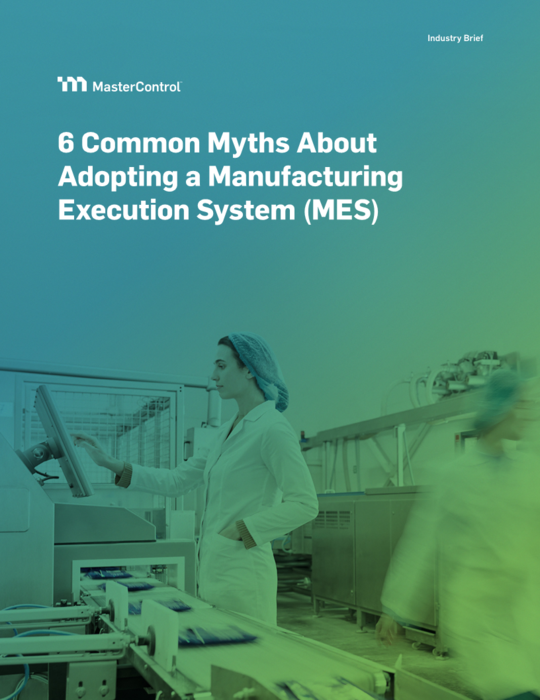
According to data highlighted in MasterControl's "6 Common Myths About Adopting a Manufacturing Execution System (MES)" industry brief, executing a validation project using a traditional methodology can require more than 100 hours in labor-intensive activities. And that's just the beginning. Those hours multiply across different modules, sites, and every subsequent change you make.
The validation burden doesn't end when you go live, either. Every system upgrade triggers re-validation, creating a persistent hesitancy to improve. Traditional MES solutions tend to be so highly configured and customized, it can make the validation process very difficult to complete. Anytime there is an upgrade or a change that needs to be introduced, software validation becomes much more difficult. As a result of these various factors, many manufacturers end up trapped with outdated systems because the validation effort simply isn't worth it.
Digital validation. Accelerated implementation. That changes everything. Download our comprehensive industry brief "6 Common Myths About Adopting a Manufacturing Execution System (MES)" to discover how modern solutions are transforming life sciences manufacturing.
The New Paradigm: Risk-Based Validation
Here's the good news: validation approaches are evolving. Modern methodologies focus on risk assessment rather than exhaustive documentation. This shift aligns perfectly with updated regulatory thinking that recognizes not all system features carry equal patient safety impact.
Risk-based validation targets your testing efforts on the aspects that truly impact product quality and patient safety. This smarter approach lets you:
Target your testing on what actually matters.
Leverage vendor validation instead of duplicating work.
Automate repetitive activities to free up your team.
Apply your expertise where it makes the biggest difference.
The result? Validation that's faster and more effective at ensuring what truly counts: product quality and patient safety.
Why Your MES Implementation Timeline Matters
In life sciences, speed-to-market isn't just about profits, it's about patients. Every month spent implementing systems is a month delayed in achieving your manufacturing excellence goals.
The traditional MES implementation timeline (often 18-24 months according to industry data2) creates real business pain:
ROI Delay: You're investing big but waiting years for returns.
System Duplication: Running paper and electronic systems simultaneously doubles work and error risks.
Competitive Lag: While you're implementing, competitors with agile systems are innovating.
Change Management Challenges: Longer projects make user adoption harder.
By streamlining validation during MES implementation, you can dramatically accelerate time-to-value. MasterControl's customers typically see initial return on investment (ROI) within four to eight months, with first-year savings of \$250,000 to \$300,000 depending on facility size.
The MasterControl Approach: Validation Built Into Implementation
Next-generation MES solutions treat validation as an integral component of implementation—not a separate, bolted-on activity. MasterControl's implementation methodology incorporates risk-based validation from day one, ensuring compliance without extending your timeline.
This integrated approach delivers:
1. Pre-Validated Functionality
Much of a modern MES arrives pre-validated, limiting your team's burden to configurations specific to your processes.
2. Risk-Based Validation Planning
Instead of treating all system aspects equally, you can focus validation efforts on the critical processes that impact alignment with good manufacturing practice (GMP) guidelines.
3. Automated Validation Tools
Built-in validation tools generate documentation and execute test protocols automatically, dramatically reducing manual effort.
4. Streamlined Documentation
Focus on documenting what matters from a regulatory perspective, not creating binders for their own sake.
5. Validation-Friendly Configuration Tools
No-code configuration tools let you make process changes without triggering extensive revalidation, since the core platform remains unchanged.
Faster validation. Better compliance. That changes everything. Learn how streamlined MES implementation transforms life sciences manufacturing by downloading our industry brief "6 Common Myths About Adopting a Manufacturing Execution System (MES)."
From Months to Hours: The Validation Timeline Transformation
The most exciting outcome of modern validation approaches is the dramatic compression of timelines. Where traditional methods added months to MES validation projects, modern approaches can cut this to days or even hours.
A purpose-built MES like MasterControl's Manufacturing Excellence employs a risk-based, automated approach to validation that focuses on a manufacturer's critical business processes. Its proven process leverages MasterControl's internal validation testing to reduce overall effort, cost, and time.
The outcome of using MasterControl's patented validation process:
Ongoing validation is built into your process rather than treating it as a one-time event.
Overall system validation time is reduced from months to days, if not hours.
This acceleration comes through several innovations:
Leveraged Vendor Validation: Use the provider's validation results instead of repeating their work.
Automated Test Execution: Run hundreds of test cases in hours, not weeks.
Template-Based Documentation: Start with pre-approved templates instead of blank pages.
Compliance Without Compromise
You might worry that faster validation could compromise regulatory compliance. But the U.S. Food and Drug Administration (FDA) and other agencies have been encouraging risk-based approaches to validation for years. Modern risk-based approaches actually align better with current regulatory thinking.
The key is documenting your risk assessment process thoroughly and ensuring critical system functions receive appropriate attention. By focusing validation efforts where they matter most, you actually improve compliance effectiveness while reducing overhead.
Modern life sciences MES solutions build compliance into their DNA with:
Audit trails that capture all data changes automatically.
Electronic signatures that meet 21 CFR Part 11 requirements.
Built-in review workflows that ensure proper oversight.
Data integrity controls that prevent unauthorized alterations.
Configuration management capabilities that help maintain system state awareness.
These features ensure your system maintains compliance by design, not through endless customization and validation.
Change Management: The Hidden Validation Challenge
Initial validation is just the beginning. The ongoing validation required for system changes represents an even greater long-term challenge for most life sciences manufacturers. Traditional life science MES systems often require extensive revalidation for minor changes, creating a disincentive to keep systems current.
Modern MES platforms tackle this head-on with functionality expressly designed for life sciences companies, such as:
Change impact assessment tools that automatically identify validation implications of configuration changes.
Modular architecture, which limits validation to affected components.
Version control capabilities that clearly document changes between releases.
Validation heritage that builds on previous validation rather than starting fresh.
MasterControl's advanced patented validation technology presents the changes needed to be reviewed. This limits the risk and cost to upgrade, allowing for simpler, more frequent upgrades as well as sustainable validation in the cloud. The combined effect of these capabilities transforms ongoing MES management from a validation burden into a sustainable business process.
Simpler validation. Digital transformation. That changes everything. Discover how a modern MES transforms life sciences manufacturing without the validation burden. Download our industry brief "6 Common Myths About Adopting a Manufacturing Execution System (MES)" today.
Real Business Impact: Beyond Time Savings
Streamlining validation during MES implementation delivers more than just time savings. The business advantages transform your entire manufacturing operation by providing:
Faster Value Realization: When implementation completes in months rather than years, ROI accelerates dramatically.
Resource Redirection: Your team can focus on innovation rather than documentation.
Greater System Adoption: Quicker implementation with less disruption leads to better user acceptance.
Enhanced Quality: Modern validation approaches focus on what actually impacts patient safety.
Future-Ready Operations: Systems that update without validation headaches stay current with best practices.
According to MasterControl's data, life sciences manufacturers using modern MES solutions see remarkable operational improvements like:
25% fewer deviations.
90% fewer data errors.
30% greater efficiency.
80% faster GMP review.
50% faster product release.
These aren't just metrics—they're competitive advantages that directly impact your bottom line and patient outcomes.
Conclusion: Validation as Your Competitive Advantage
For today's efficiency-minded life sciences manufacturers, validation isn't a regulatory adversary faced during MES implementation and continually battled for the life of a system. It's an opportunity to build quality into processes from day one while accelerating time-to-value.
By embracing modern, risk-based validation approaches and selecting an MES solution designed for efficient validation, you can transform what was once a months-long burden into a streamlined process that takes days or even hours. The result? Faster implementation, quicker ROI, and a more agile manufacturing operation that can adapt to changing patient needs.
As the life sciences industry evolves toward more personalized medicine, cell and gene therapies, and other specialized treatments, manufacturing agility becomes crucial. The ability to implement and validate systems quickly is more than just an operational concern. It's a strategic advantage that will help you bring life-changing products to more people sooner.
Validation simplified. Patient impact amplified. That changes everything. Transform your approach to MES implementation by downloading MasterControl's industry brief "6 Common Myths About Adopting a Manufacturing Execution System (MES)" today.
References:
"The Evolution of Validation Best Practices," MasterControl, 2020.
"4 Reasons Why MES Implementations Are So Painful," NNIT.

Manufacturing, Quality, and Asset Management — Simplified with Life Sciences-Specialized AI.
MasterControl Inc. is a leading provider of cloud-based quality and manufacturing software for life sciences and other regulated industries. For three decades, our mission has been the same as that of our customers – to bring life-changing products to more people sooner. MasterControl helps organizations digitize, automate, and connect quality and manufacturing processes. Innovative MasterControl tools have a proven track record of improving product quality, reducing cost, and accelerating time to market. Over 1,100 companies worldwide use MasterControl solutions to streamline operations, maintain compliance, easily analyze and interpret large amounts of data, and visualize business insights in real time.
Follow Us
Industry Brief
Enjoying this blog? Learn More.
6 Common Myths About Adopting a Manufacturing Execution System (MES)