GxP Lifeline
Smart, Compliant, and Scalable: Manufacturing Agility for EMEA Life Sciences
Price spikes. Port delays. Empty shifts. Across EMEA, manufacturers are navigating a perfect mix of economic pressure and operational disruption. Inflation is squeezing margins. Supply chains are strained to breaking point. Talent shortages are no longer a temporary headache — they're a structural challenge. In industries where precision and compliance are non-negotiable, the stakes couldn't be higher.
However, manufacturers in life sciences and other highly regulated sectors face an even more complex challenge: how to stay agile in the face of constant change without compromising on quality or compliance.
That's where agile compliance comes in. It's a strategic shift that enables manufacturers to quickly adapt to market demands, shift production, or respond to disruption while still meeting strict regulatory requirements. It means moving faster but never cutting corners.
Below, you'll learn how digital manufacturing solutions, especially modern manufacturing execution systems (MES), are helping manufacturers build agility into their operations.
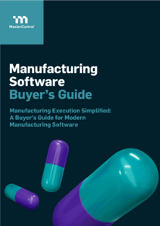
Learn how forward-thinking manufacturers are discovering that the right digital tools can transform manufacturing execution from a constraint into a competitive advantage in MasterControl's industry brief: Manufacturing Execution Simplified: A Buyer's Guide for Modern Manufacturing Software. Read now.
Why EMEA Manufacturers Struggle to Balance Agility and Compliance
EMEA life sciences manufacturers face a convergence of market pressures. Inflation continues to strain margins, with nominal wages in the euro area rising around 4.5%, and in parts of Central Europe surging above 10%, putting added pressure on costs across operations. Meanwhile, chronic labour-and-skills gaps persist: recent data indicates a 160% surge in postings for pandemic-readiness roles and a staggering 1,200% increase in endodontics — evidence of mismatches in critical STEM skills.
These pressures are compounded by supply-chain fragility and strict compliance demands. For example, new EU regulations, including Medical Device Regulation (MDR) and In Vitro Diagnostic Regulation (IVDR) updates, require early notification of medical-device supply issues from January 2025, further complicating matters. At the same time, life science firms must hit compliance targets even as they scramble for flexibility to cope with disruptions.
Organisations are faced with a dilemma: achieve flexibility or maintain compliance. Operating within the rigid framework of good manufacturing practice (GMP), MDR, IVDR, and clinical-trials regulations often conflicts with the need for rapid response, be it ramping up capacity for biologics or shifting production to new sites.
On top of that, EMEA manufacturers must grapple with regional complexity as they run multi-site operations across countries with different languages, cultures, and regulatory interpretations.
Our buyer's guide reveals how manufacturers can reduce lead times while maintaining full compliance across different European markets. Download the guide here.
4 Key Barriers to Manufacturing Agility in EMEA
Even as manufacturers strive to modernise their operations, many still stumble over four persistent barriers. These obstacles — ranging from legacy paperwork to localised standards — severely restrict agility, transparency, and compliance. Understanding each one is critical for adopting digital manufacturing solutions and a modern MES for life sciences.
1. Paper-Based Legacy Systems
Despite the digital push, many EMEA facilities still rely on hardcopy batch records, logs, and standard operating procedures (SOPs). In multilingual sites, translating and managing these documents slows decision-making and increases the risk of errors or misplaced paperwork. This not only hinders production speed but also undermines GMP and MDR/IVDR audit readiness, as paper trails are less secure, harder to track, and more susceptible to version confusion.
Learn how leading manufacturers achieved a 90% reduction in data errors by moving beyond paper-based systems in MasterControl's comprehensive brief: Manufacturing Execution Simplified: A Buyer's Guide for Modern Manufacturing Software.
2. Disconnected Digital Tools
Organisations often invest in digital tools, only to end up with fragmented systems, such as standalone MES, learning management system (LMS), and enterprise resource planning (ERP) modules that don't share data. According to a 2024 study, only 15% of European manufacturers enjoy real-time visibility over work-in-progress across their sites. Without integrated data flows, traceability suffers and deviations go undetected until it's too late, threatening quality and compliance.
MasterControl's buyer's guide explains how connected manufacturing systems provide real-time work-in-process visibility across multiple facilities. Download the guide here.
3. Rigid Manufacturing Systems
Traditional MES platforms were built for stability, not agility. Although they support quality controls and batch workflows, their inflexible architectures make it difficult to accommodate rapid shifts such as new drug formulations, custom packaging, or urgent scaleups. As a result, any required change can trigger costly and time-consuming system reconfiguration and validation — shifting time to market and increasing the chance for compliance oversight.
Discover why traditional MES may not be the right choice for manufacturers requiring agility and how modern alternatives offer greater flexibility. Read our comprehensive buyer's guide.
4. Cross-Border Standardisation Challenges
To gain economies of scale, firms aim to harmonise systems and processes across 10, 20, and up to 50 sites. Yet Europe's regulatory landscape is far from uniform. For instance, while einvoicing is adopted by over 90 % of businesses in Germany and Sweden, it remains underutilised in countries like Poland. These local variations demand bespoke process adaptations, complicating multisite MES rollouts and raising the risk of inconsistencies in quality and compliance controls.
Find out how configurable manufacturing solutions enable standardisation while supporting regional requirements across European operations in MasterControl's in-depth guide: Manufacturing Execution Simplified: A Buyer's Guide for Modern Manufacturing Software.
Together, these four barriers severely restrict an organisation's ability to implement agile compliance and respond swiftly to market volatility without compromising standards.
Building an Agile Manufacturing Foundation for EMEA Operations
Smart manufacturing is no longer optional in EMEA — it's essential. With the market projected to grow from \$45.8 billion in 2024 to over \$112 billion by 2031, manufacturers are embracing connected technologies to respond to faster disruption, improve efficiency, and future-proof operations.
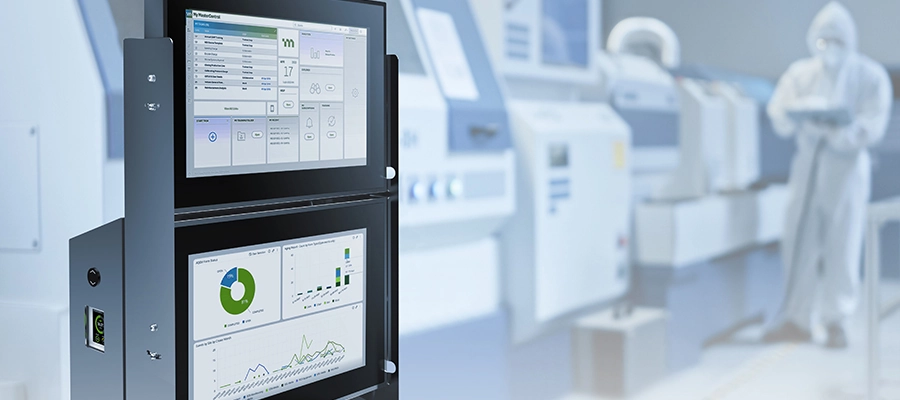
For life sciences and other regulated industries, agility must go hand in hand with compliance. That's where a modern manufacturing execution system (MES) makes the difference. Unlike legacy systems, today's MES solutions offer built-in compliance controls, flexible workflows, and real-time visibility to enhance quick adaptation without compromising quality or regulatory standards.
Put simply, by unifying manufacturing solutions across sites and regions, a modern MES helps EMEA life sciences manufacturers balance global standardisation with local regulatory requirements. The result: faster decision-making, fewer manual errors, and operations that are both compliant and competitive.
Want more information on how manufacturing execution is being simplified through modern, configurable digital tools? Download our buyer's guide: Manufacturing Execution Simplified: A Buyer's Guide for Modern Manufacturing Software.
MES Implementation Essentials for EMEA Manufacturers
Building agile, compliant operations in Europe requires more than just adopting digital manufacturing solutions — it calls for a clear, region-specific implementation plan. From language support to regulatory complexity, here are the top considerations when rolling out a modern MES for life sciences across EMEA:
- Multilingual support: Ensure the MES supports interface localisation and documentation in multiple languages. This is essential for user adoption, data accuracy, and regulatory compliance across multilingual regions.
- Integration with legacy systems: Many European sites still rely on older ERP or supervisory control and data acquisition (SCADA) systems. Choose a modular MES that integrates smoothly with existing infrastructure through APIs or middleware to avoid disruption.
- Data standardisation and governance: Clean, consistent data is the backbone of compliance. Standardise formats and apply governance rules to ensure traceability across regions.
- Local adaptation within global standards: Harmonise core processes across all sites, but allow flexibility to meet local regulatory or operational needs, especially where country-specific rules apply.
- Change management and training: Engage local teams early and invest in multilingual training to build confidence and ensure successful adoption.
- Cybersecurity and compliance: Apply security measures and audit trails aligned with theGeneral Data Protection Regulation (GDPR) to meet both IT and regulatory standards across the EU and UK.
Learn how manufacturers have achieved full paperless implementation across multiple European sites in under six months. Download MasterControl's buyer's guide here.
Next Steps for Agile, Compliant Growth
EMEA manufacturers can't afford to choose between speed and compliance — they need both. With the right digital manufacturing solutions and a modern MES built for life sciences, it's possible to move faster, stay flexible, and remain fully compliant across multi-site, multilingual operations. The key is choosing a system designed for today's complexity and tomorrow's growth.
Curious where to start? MasterControl's comprehensive buyer's guide — Manufacturing Execution Simplified: A Buyer's Guide for Modern Manufacturing Software — explores must-have features, key evaluation criteria, and implementation tips tailored for EMEA manufacturers navigating rapid change. Download the guide now to learn more.

Manufacturing, Quality, and Asset Management — Simplified with Life Sciences-Specialized AI.
MasterControl Inc. is a leading provider of cloud-based quality and manufacturing software for life sciences and other regulated industries. For three decades, our mission has been the same as that of our customers – to bring life-changing products to more people sooner. MasterControl helps organizations digitize, automate, and connect quality and manufacturing processes. Innovative MasterControl tools have a proven track record of improving product quality, reducing cost, and accelerating time to market. Over 1,100 companies worldwide use MasterControl solutions to streamline operations, maintain compliance, easily analyze and interpret large amounts of data, and visualize business insights in real time.