GxP Lifeline
Always Audit-Ready: Proactive Compliance for EMEA Life Sciences in Economically Variable Times

Regulatory inspections are changing. Your readiness shouldn't.
The COVID-19 pandemic forced regulatory bodies worldwide to adapt their inspection approaches overnight. According to the International Coalition of Medicines Regulatory Authorities (ICMRA), regulators quickly implemented remote oversight methods, focusing on document sharing, virtual facility tours, and remote system access. But these changes are just the beginning. As we enter a new era of hybrid inspections, your ability to instantly produce compliant documentation isn't just good practice—it's essential business strategy. Life sciences organisations that embrace digital compliance are avoiding risks whilst accelerating their path to market with higher quality products.
New Challenges Demand New Solutions
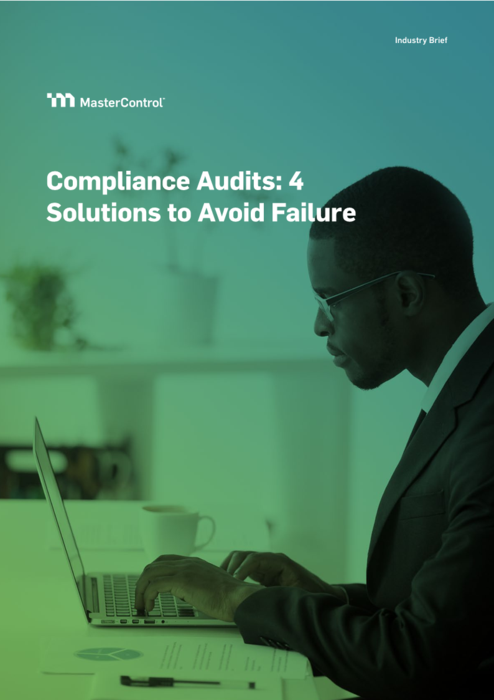
Change in regulated industries might come slowly, but it always comes. As MasterControl's Compliance Audits industry brief notes, "New regulations, global pandemics, and new technology all disrupt the way life sciences companies approach compliance."
But here's the real challenge: successfully adapting to change isn't enough. You also need to prove you've adapted.
Remember that old quality adage? "If it wasn't documented, it didn't happen." In today's compliance landscape, documentation and traceability are just as crucial as your actual compliance activities.
COVID-19 Changed the Game
The pandemic fundamentally transformed regulatory inspections. Almost immediately, regulators worldwide had to find ways to maintain oversight while respecting social distancing requirements.
The ICMRA formed a COVID-19 working group to coordinate regulatory approaches. Their findings show that regulators quickly adapted to remote methods, focusing on:
- Sharing documents digitally.
- Conducting virtual facility tours.
- Accessing electronic systems remotely.
- Interviewing subject matter experts via video conference.1
But here's what's interesting: we're not going back to the old ways completely. According to the ICMRA report, while remote inspections were essential during the pandemic, they won't fully replace on-site inspections.
What does this mean for you? Get ready for a hybrid future that combines remote elements with traditional on-site inspections. Digital readiness isn't optional anymore.
Ready to transform your approach to compliance audits? Download our industry brief and discover how digitisation will help you stay audit-ready regardless of economic conditions.
Four Pain Points Holding You Back
Let's be honest about the challenges you're facing. The industry brief identifies four persistent compliance hurdles that might be slowing you down:
- Document Control: How many hours have your teams wasted hunting for the current version of a standard operating procedure (SOP)?
- Training Management: Can you instantly show an inspector who has been trained on what?
- Corrective Action/Preventive Action (CAPA) Management: Are your corrective actions falling through the cracks?
- Audit Readiness: Does your team go into panic mode when inspectors call?
These challenges hit especially hard if you're still relying on paper. As the industry brief notes, paper-based organisations face significant delays during remote inspections whenever records have to be located, scanned, and then securely sent.
Digital Quality: Your Path to Always-Ready Compliance
Paper-based compliance is yesterday's approach. Today's regulatory landscape demands the efficiency of digital quality management.
The best way to adapt to these and future changes is by moving to a fully electronic quality management system (eQMS). With digital quality management, you can transform critical compliance functions. For instance:
- Documents become instantly accessible and version-controlled.
- Training is automated and easily verified, and training records are centrally maintained.
- CAPAs connect seamlessly to root causes.
- Audit trails are generated automatically.
Imagine eliminating those frantic document searches just before an inspection. Picture your team confidently presenting any requested information within seconds instead of hours.
Want to see how a digitally connected quality ecosystem changes everything? Download our industry brief for insights into these powerful compliance tools.
Real-World Challenge: Updating SOPs Without Losing Your Mind
Let's talk about a scenario every quality professional dreads: updating an SOP after a regulatory change.
With paper-based systems, here's your reality:
- Hunt through filing cabinets for the current version.
- Check every team member's desk for copies.
- Track down all digital versions saved to individual computers.
- Manually destroy and replace all copies.
- Train relevant staff on changes.
- Create documentation proving all of this happened correctly.
Sound familiar? This process burns valuable hours and introduces countless opportunities for error and loss.
With digital quality management, everything changes. One update instantly propagates throughout the system. The old version is automatically archived. Training tasks are automatically assigned to the right people. And the entire process is documented with secure audit trail and stored in a centralized, easy-to-access repository.
That's not just better compliance—it's better business.
Compliance Software That Works Together
Individual point solutions might address specific challenges, but they create new problems like data silos, manual transfers, and disconnected processes.
Our industry brief emphasises what really works: systems operating on a single platform that readily exchange information and improve automation.
Here's where things get interesting. With connected compliance tools, your quality processes flow naturally with sequential functionality such as:
- An audit finding can instantly trigger a CAPA.
- The CAPA can directly update an SOP.
- The updated SOP automatically assigns training task.
- The entire process is documented in a single, traceable workflow.
This connected approach ensures nothing falls through the cracks, which is crucial when regulators are scrutinising your systems.
Data Integrity: No Longer a Manual Effort
ALCOA—attributable, legible, contemporaneous, original, accurate. These principles of data integrity have always been essential for compliance. But maintaining them manually is extraordinarily difficult.
Digital systems eliminate this challenge. As our industry brief notes, "With built-in audit trails, MasterControl customers always know who input data, if anyone has changed that data, and when that was done. Legibility is a nonissue with a computerised system."
This automated approach to data integrity not only satisfies regulatory requirements, but it also fundamentally changes how your team works with compliance data.
Wondering how digital quality management transforms data integrity? Download our industry brief to see how digital tools protect your compliance data.
After the Inspection: What Happens Next
Surviving an inspection is just the beginning. How you handle the aftermath often determines your future compliance success.
With paper systems, post-inspection CAPAs often become a new administrative burden since audit findings within paper or disconnected systems have to be relayed to the CAPA system. Once the quality department determines the action required, it must be recorded. And that needs to be followed by monitoring.
Digital quality management streamlines this entire cycle by allowing you to:
- Launch CAPAs directly from audit findings.
- Automatically populate data fields.
- Track every action.
- Close the loop with verification.
The result of implementing smarter optimisation? Faster resolution, better documentation, and a stronger compliance position for your next inspection.
Beyond Compliance: The Business Impact
Let's talk about what really matters: the bottom line.
Digital quality management isn't just about satisfying regulators. It delivers tangible business benefits such as:
- Hours saved tracking down documents.
- Money saved avoiding compliance penalties.
- Faster time-to-market with fewer regulatory delays.
- Quality personnel focused on improvement, not paperwork.
In economically challenging times, these efficiencies aren't just nice-to-have—they're essential competitive advantages.
Preparing for Tomorrow's Inspections Today
The future of regulatory oversight is hybrid. Being prepared for both in-person and virtual appearances means having the technology and resources necessary to deal with the various virtual and in-person aspects of an inspection.
The organisations that thrive won't be those that resist change. They'll be the ones that embrace it.
Quality Connected. Compliance Simplified. That Changes Everything.
Audits and inspections don't have to be stressful organisational disruptions. With the right technology approach, they can become routine demonstrations of your quality excellence.
Life sciences companies that embrace digitisation are setting themselves up for success in audits and inspections—remote and in person—but also in the marketplace as they get to market faster with higher quality products.
That's not just better compliance. That's better business.
Ready to transform compliance from a business constraint to a competitive advantage? Download our comprehensive industry brief today and begin your journey toward always-ready compliance.
References:
- "Reflections on the regulatory experience of remote approached to GCP and GMP regulatory oversight during the COVID-19 Pandemic," International Coalition of Medicines Regulatory Authorities (ICMRA), Nov. 26, 2021.

Manufacturing, Quality, and Asset Management — Simplified with Life Sciences-Specialized AI.
MasterControl Inc. is a leading provider of cloud-based quality and manufacturing software for life sciences and other regulated industries. For three decades, our mission has been the same as that of our customers – to bring life-changing products to more people sooner. MasterControl helps organizations digitize, automate, and connect quality and manufacturing processes. Innovative MasterControl tools have a proven track record of improving product quality, reducing cost, and accelerating time to market. Over 1,100 companies worldwide use MasterControl solutions to streamline operations, maintain compliance, easily analyze and interpret large amounts of data, and visualize business insights in real time.